

Boring Machine
-
![CNC Boring Machine]() CNC Boring MachineModel TK6511/ TKP6511/ TK6513/ TKP6513/ TK6516/ TKP6516 boring machine has a T-shaped layout, with a single column and a side-hanging box structure. The worktable and its sliding seat move along...read more
CNC Boring MachineModel TK6511/ TKP6511/ TK6513/ TKP6513/ TK6516/ TKP6516 boring machine has a T-shaped layout, with a single column and a side-hanging box structure. The worktable and its sliding seat move along...read more -
![CNC Floor Type Boring And Milling Machine]() CNC Floor Type Boring And Milling MachineE-FORCE 160RH/200RH is a high-precision CNC floor-type boring and milling machine developed by SMTCL, designed for medium-to-large workpiece processing. With its single-column side-hanging box...read more
CNC Floor Type Boring And Milling MachineE-FORCE 160RH/200RH is a high-precision CNC floor-type boring and milling machine developed by SMTCL, designed for medium-to-large workpiece processing. With its single-column side-hanging box...read more -
![CNC Horizontal Boring Machine]() CNC Horizontal Boring MachineModel TK6511/ TKP6511/ TK6513/ TKP6513/ TK6516/ TKP6516 boring machine has a T-shaped layout, with a single column and a side-hanging box structure. The worktable and its sliding seat move along...read more
CNC Horizontal Boring MachineModel TK6511/ TKP6511/ TK6513/ TKP6513/ TK6516/ TKP6516 boring machine has a T-shaped layout, with a single column and a side-hanging box structure. The worktable and its sliding seat move along...read more -
![Conventional Boring Machine]() Conventional Boring MachineSpindle diameter mm: Φ110read more
Conventional Boring MachineSpindle diameter mm: Φ110read more
X axis travel mm: 900
Y axis travelmm: 1000
Z axis travel mm: 1000
Worktable size mm: 960*1100
Main motor power kw: 7.5


Our Factory
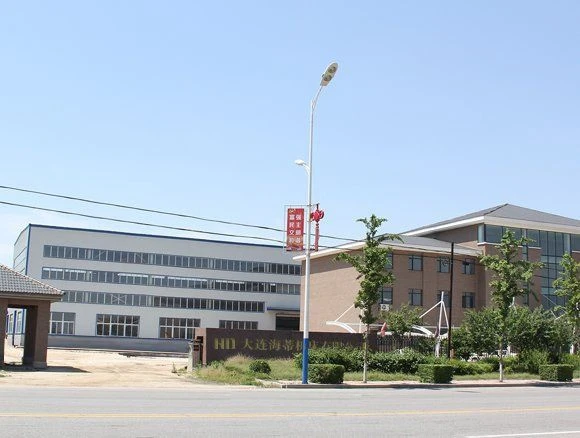
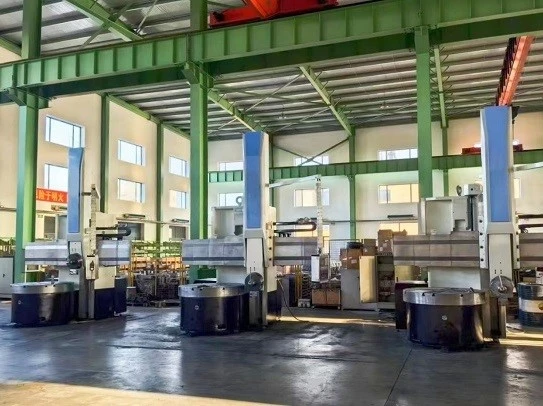
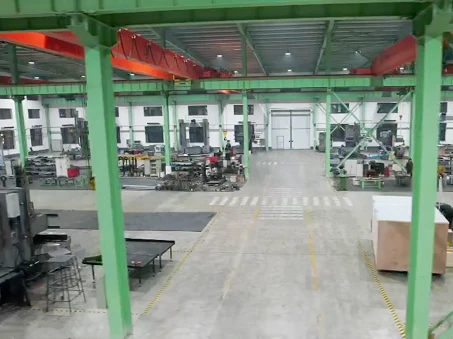
Dalian Haidi Machinery Co.,Ltd is a professional manufacturer that specializes in the development, research and production of single-column vertical lathe, double-column vertical lathe, horizontal lathe, boring-milling machine, machining center, gear hobbing machine. The researched products by our company have such advantages as a great variety, complete specification, advanced technology and outstanding quality. Haidi Machinery covers building area of 30,000 square meters. Now we have more than 200 staff members, including 11 senior engineers, 8 senior managerial staff, over 160 technical workers. Our factory has strong strength and excellent processing equipment. The machine tools produced by our factory are sold all over the country and the world. The advanced design, reliable trustworthy, simple operation, flexible use, high precision, high cost performance and perfect after-sales service have won the unanimous praise of users. Our company is the largest enterprise that specializes in the casting of machine tool in southern Liaoning.In the meantime, it has offered great support to speed up our company's product research and production and made great contribution to providing products to customers in the shortest duration.


Products Description
Boring machine, device for producing smooth and accurate holes in a workpiece by enlarging existing holes with a bore, which may bear a single cutting tip of steel, cemented carbide, or diamond or may be a small grinding wheel. Single-point tools, gripped in a boring head attached to a rotating spindle, are moved circularly against the sides of the existing holes. The diameter of the hole swept out by the tool is controlled by adjustment of the boring head.
Advantages of Boring Machine
Superior accuracy
Boring Machining allows for the precise machining of holes in various materials. While typical drilling processes can achieve an accuracy of up to 0.02 inches, boring operations can achieve accuracies of up to 0.0005 inches. That' s an incredible 40 times more precise than standard drilling operations.
Better surface finish
Boring Machining offers improved surface finishes. This process can achieve a surface finish of up to 32 micro inches (Ra value), significantly smoother than many other machining methods.
Versatility
Boring Machining can be used on a wide range of materials, from common metals like steel and aluminum to softer materials like wood and plastic. It’ s not just limited to round holes either with the right tooling, you can get machine slots, grooves, and keyways.
Efficiency
With advanced automated boring machines, production times can be significantly reduced. This efficiency can lead to reduced manufacturing costs and faster production times, which is crucial in high-volume industries.
Why Choose Us
Experienced team
Our staff comprises seasoned professionals with extensive experience in technology development, offering deep expertise in a wide array of tech domains.
Quality assurance
We adhere to stringent quality control processes to deliver reliable and high-performance products that exceed industry standards.
Customization
Our team of experts provides tailored services to address specific challenges, ensuring each solution is unique and perfectly suited to the client's requirements.
After-sales service
Dedicated to strict quality control and thoughtful customer service, our experienced staff members are always available to discuss your requirements and ensure full customer satisfaction.
Leading factory
20+years' production experience as the leading manufacturer for vertical lathe,horizontal lathe, machining center,boring machine,milling Machine, drilling machine, slotting machine, gear hobbing machine, etc.
Exportation to 60+ countries
Our products have exported to Australia, Chile, Peru, Turkey, Russia, Indonesia, Saudi Arabia,USA, Belarus, Argentina Singapore and others, around 60 countries.
Types Of Boring Machine
Boring machines are specialized machinery used in industrial, manufacturing, and construction processes to make precise and accurate holes in workpieces. They employ various cutting and boring tools that drill into the material and remove the excess material to create a hole with the desired size and shape.
There are various types of boring machines, with each designed for specific applications and materials. Some of the common types include horizontal boring machines, horizontal and vertical machine boring machines, deep hole boring machines, tunneling machines, and jig borers. Horizontal boring machines are typically used to create large holes in heavy workpieces. horizontal boring machine are commonly used in the construction of large structures such as bridges and buildings. Vertical boring machines, on the other hand, are used to create holes in smaller workpieces. Vertical and horizontal boring machines are commonly used in the manufacturing of engine blocks and other automotive components.
Deep hole boring machines are used to create holes with a depth-to-diameter ratio of more than 10:1. They are commonly used in the manufacturing of gun barrels and hydraulic cylinders. Tunneling machines, also known as tunnel boring or milling machines elsewhere, are used in the construction of tunnels for transportation and mining. They are capable of boring through various types of soil and rock. Jig borers are used to create highly precise holes in workpieces. They are commonly used in the manufacturing of aerospace components and other high-precision parts.
Key Components Of A Boring Machine
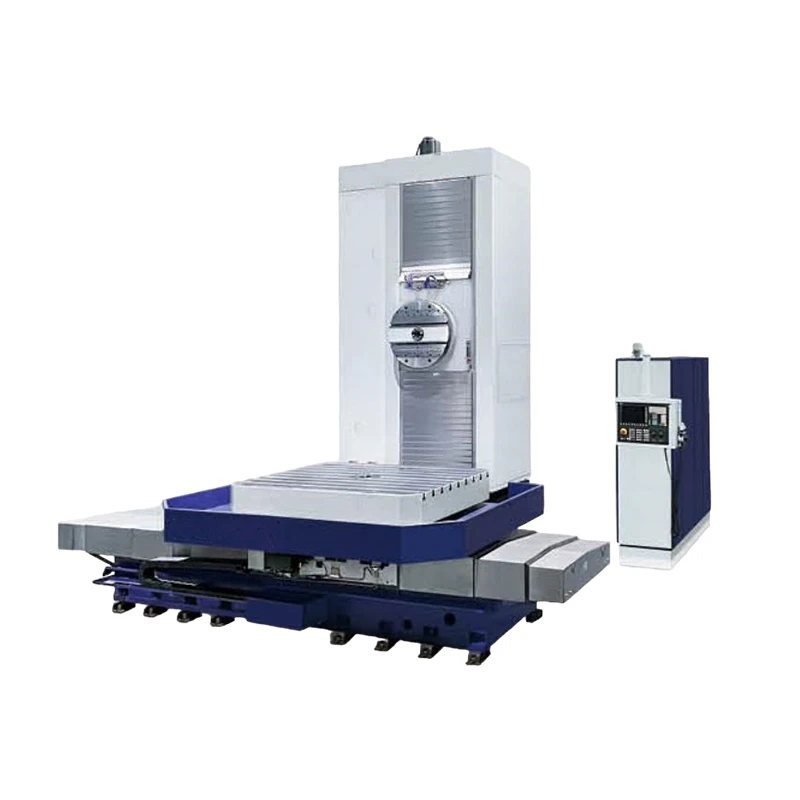
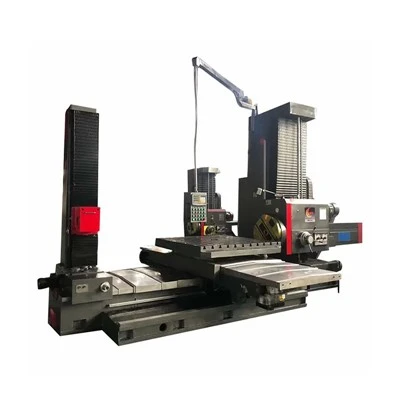
A typical boring machine consists of the following key components. The base or frame supports the machine structure and provides stability. The spindle supports the cutting tool and rotates at high speeds to create the hole. The cutting tool, which can be a drill, boring bars, or other specialized tools, depending on the material and application. The worktable supports the workpiece and moves it in different directions to ensure precise and accurate drilling.
The coolant system reduces the heat generated by the drilling process and lubricates the cutting tool. The base or frame of a boring bar is typically made of cast iron or steel, which provides the necessary rigidity and stability to the machine. The spindle of a horizontal boring mill is usually driven by an electric motor, which rotates the cutting tool at high speeds. The cutting tool is typically made of high-speed steel or carbide, which can withstand the high temperatures and pressures generated during the drilling process.
The cutting tool is held in place by a tool holder, which can be adjusted to achieve the desired depth and diameter of the hole. The worktable of a boring machine can be moved in different directions, including up and down, left and right angles, and forward and backward. This allows the machine to create holes with different angles and orientations. The coolant system of a boring machine is essential in reducing the heat generated by the drilling process. It also helps to lubricate the cutting tool and remove the chips and debris generated during the drilling process. Boring machines are essential in a wide range of industries and applications. They are capable of creating precise and accurate holes in workpieces of different sizes and materials, making them an indispensable tool in modern manufacturing and construction processes.
Introduction to the Working Process of Boring Machine
The first step in any boring operation is to prepare the workpiece and the machine. This involves assessing the material hardness and thickness, selecting the appropriate cutting and boring tools, and aligning the workpiece on the top table-type boring machine or bed. Assessing the material hardness and thickness is crucial in determining the type of cutting tool and spindle speed required for the boring process.
For instance, if the material is too hard, a diamond-tipped cutting tool would be more suitable than a high-speed steel tool. Similarly, if the material is too thick, a slower spindle speed would be required to avoid overheating the cutting tool. Selecting the appropriate cutting and boring tools is also essential in achieving accurate and precise results. The cutting tool should be sharp and durable enough to withstand high-speed rotation and pressure during the boring process. The boring tool, on the other hand, should be of the correct size and shape to create the desired hole dimensions. Aligning the workpiece on the machine bed is critical in ensuring the boring process is carried out accurately and efficiently.
The workpiece should be secured firmly on the precision boring machine bed to prevent any movement during the boring process, which can lead to inaccuracies and defects in the final product. The boring process involves rotating the spindle at high speeds while simultaneously moving the cutting tool forward into the material. This process removes the excess material and creates a hole in the workpiece.
For accurate and precise results in the vertical boring mill, the cutting speed, feed rate, and spindle speed must be carefully controlled. Different materials and hole dimensions require different cutting speeds, feed rates, and spindle speeds. For instance, a larger hole diameter would require a slower feed rate to prevent the cutting tool from overheating and breaking. Similarly, a softer material would require a faster cutting speed and spindle speed for efficient material removal. The operator must also monitor the boring process continuously to ensure the cutting tool is not damaged or worn out. Any defects or abnormalities in the hole created must be addressed immediately to avoid compromising the final product's quality.
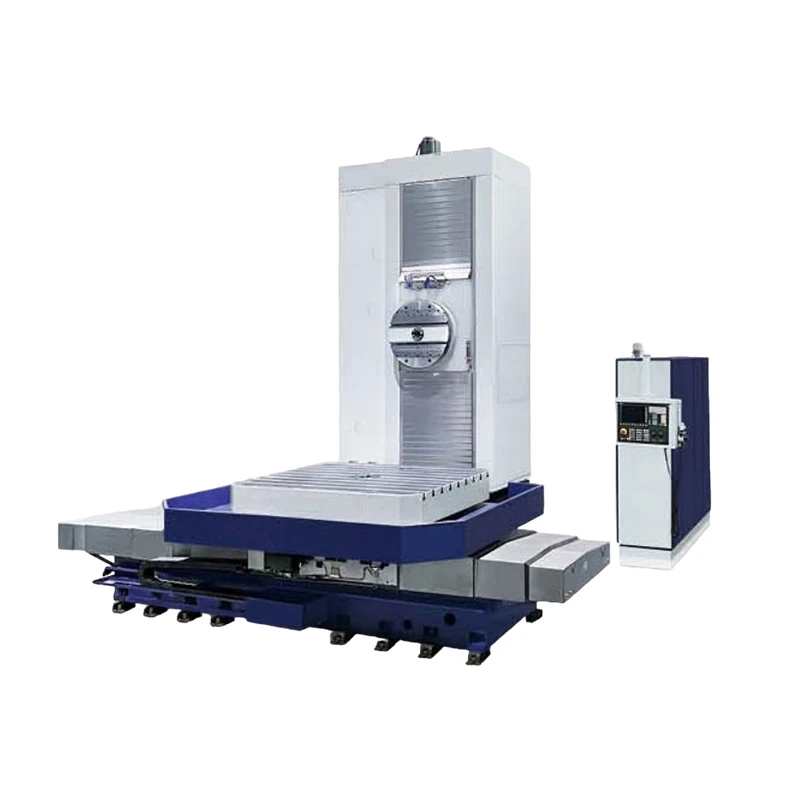
Boring Machine Finishing and Quality Control
After completing the boring operation, it is essential to check the quality and accuracy of the hole created. This involves measuring the diameter and depth of the hole using specialized instruments, checking for any defects or abnormalities, and ensuring the surface finish meets the required standards. The diameter and depth of the hole must be measured accurately to ensure they meet the required specifications.
Any deviations from the specifications must be corrected to avoid compromising the final product's functionality and safety. The surface finish of the hole must also meet the required standards. A smooth surface finish is crucial in preventing any damage or wear on the final product, especially in applications that require high precision and accuracy. Quality control is essential in ensuring the final product meets the required standards and specifications. Any defects or abnormalities must be identified and corrected before the product is released to the market.
Wide Range Of Industrial Uses For Boring Machines
Boring machines have a wide range of applications in various industries. They are known for their precision, accuracy, and efficiency in creating holes and tunnels. Boring machines are widely used in manufacturing, especially in the production of complex parts and components that require precise and accurate holes. They are used in the automotive, aerospace, and defense industries for manufacturing engine blocks, cylinder heads, and other components.
These machines can create holes of various sizes and shapes, depending on the requirements of the project. They are also capable of drilling through different materials, such as metal, plastic, and wood. They can create holes with high accuracy and repeatability. This means that the parts and components produced by these machines are consistent in terms of size and shape, which is essential for ensuring the quality and reliability of the final product. Boring machines are also capable of creating holes with a high surface finish, which reduces the need for additional finishing operations. Boring machines are also used in construction and infrastructure projects, such as tunneling, excavation, and drilling.
They can create underground tunnels, shafts, and boreholes for various purposes, including transportation, utilities, and mining. These and other boring machines are particularly useful in urban areas where space is limited, and traditional excavation methods are not feasible. Boring machines are also capable of creating tunnels and shafts of various sizes and shapes, which makes them suitable for a wide range of applications.
How to Choose a Boring Machine
To choose a boring machine it is necessary to take into account certain parameters such as the limitations of the piece and its designs. The size, the tolerance and the finish that you want to achieve must also be considered. Likewise, it is important to know if the materials of the part are supported by the boring machine; here we study their hardness, the state, the resistance, if it is casting, etc. But not only the part must be analyzed, but also the boring operations that you want to perform on the machine tool: grooving, roughing, >finishing, interior and exterior work. It is advisable to know the characteristics of each boring operation that is carried out and the parameters on them, such as the cutting speed, the power or the type of drive of the machine. Also, if you want to perform automatic machining, if the machine requires coolant and in what quantities and, of course, the characteristics of the boring-tool.
Precautions When Using Boring Machines
Comply with the general safety operating procedures for milling and boring workers. Wear labor protection articles as required. Check whether the connection of the operating handle, switch, knob, clamp mechanism and hydraulic piston is in the correct position, whether the operation is flexible, and whether the safety devices are complete and reliable. Check whether there are obstacles within the effective operating range of each axis of the machine tool. It is strictly forbidden to use machine tools with super performance. Select the appropriate cutting speed and feed rate according to the workpiece material. When loading and unloading heavy workpieces, a reasonable spreader and hoisting method must be selected according to the weight and shape of the workpiece.
When the spindle is rotating and moving, it is strictly forbidden to touch the spindle and the tool installed at the end of the spindle with hands. When changing the tool, you must stop the machine first, and then replace it after confirmation. When changing, you should pay attention to the damage of the blade. It is forbidden to step on the guide rail surface and painted surface of the equipment or place objects on it. It is strictly forbidden to knock or straighten the workpiece on the workbench.
After entering the processing program for the new workpiece, it is necessary to check the correctness of the program and whether the simulation operation program is correct. Automatic cycle operation is not allowed without testing to prevent the machine tool from malfunctioning. If the U-axis needs to move, you must ensure that the U-axis is manually clamped. The device has been released. When it is necessary to rotate the table (B axis) during work, it should be ensured that it will not touch other parts of the machine tool or other objects around the machine tool when rotating.
Certificate


FAQ
As one of the leading boring machine manufacturers and suppliers in China, we warmly welcome you to buy cheap boring machine made in China here from our factory. All our products are with high quality and low price.
customized milling machine, bar stock vertical lathe, small vertical lathe