

CNC Machining Center
-
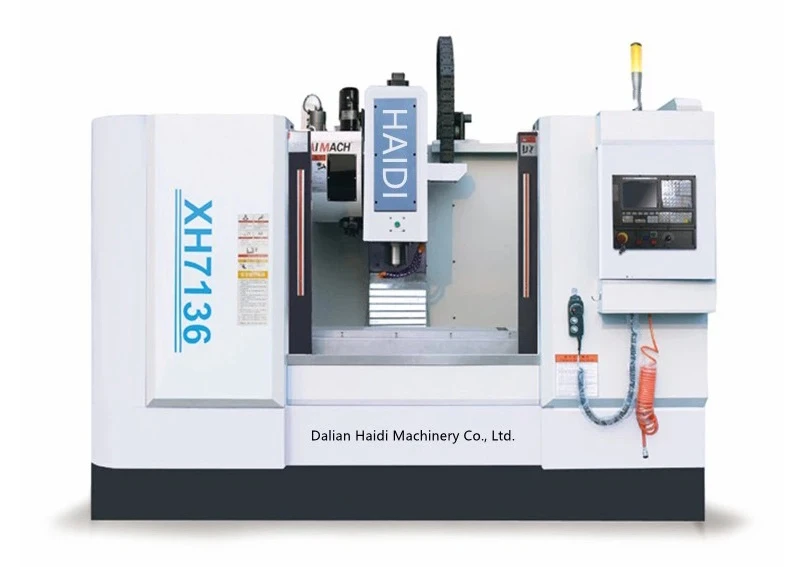
![CNC Vertical Machining Center]() CNC Vertical Machining CenterModel XH7126/ XH7136/ XH7145/ VMC850/ VMC1160/ VMC1370/ VMC1580 cnc vertical machining center can realize various complex parts such as disks, plates, shells, cams, molds, etc. One-time clamping,...read more
CNC Vertical Machining CenterModel XH7126/ XH7136/ XH7145/ VMC850/ VMC1160/ VMC1370/ VMC1580 cnc vertical machining center can realize various complex parts such as disks, plates, shells, cams, molds, etc. One-time clamping,...read more -
![High Performance Vertical Machining Center VMC1580 CNC Milling Machine]() High Performance Vertical Machining Center VMC1580 CNC Mi...The VMC1580 CNC Vertical Machining Center is a high-performance, precision-engineered machine designed for diverse industrial applications. With a generous 1500x800mm working area, this...read more
High Performance Vertical Machining Center VMC1580 CNC Mi...The VMC1580 CNC Vertical Machining Center is a high-performance, precision-engineered machine designed for diverse industrial applications. With a generous 1500x800mm working area, this...read more -
![CK6185E Heavy Duty CNC Lathe Machine]() CK6185E Heavy Duty CNC Lathe MachineFeatures include a higher stability one-piece machine bed with an integrated design that minimizes vibration for precision and reliability during complex machining; a 3-gear spindle speed offering...read more
CK6185E Heavy Duty CNC Lathe MachineFeatures include a higher stability one-piece machine bed with an integrated design that minimizes vibration for precision and reliability during complex machining; a 3-gear spindle speed offering...read more -
![CNC Vertical Machine Center]() CNC Vertical Machine CenterModel XH7126/ XH7136/ XH7145/ VMC850/ VMC1160/ VMC1370/ VMC1580 cnc vertical machining center can realize various complex parts such as disks, plates, shells, cams, molds, etc. One-time clamping,...read more
CNC Vertical Machine CenterModel XH7126/ XH7136/ XH7145/ VMC850/ VMC1160/ VMC1370/ VMC1580 cnc vertical machining center can realize various complex parts such as disks, plates, shells, cams, molds, etc. One-time clamping,...read more -
![Vertical Machine Center]() Vertical Machine CenterModel XH7126/ XH7136/ XH7145/ VMC850/ VMC1160/ VMC1370/ VMC1580 cnc vertical machining center can realize various complex parts such as disks, plates, shells, cams, molds, etc. One-time clamping,...read more
Vertical Machine CenterModel XH7126/ XH7136/ XH7145/ VMC850/ VMC1160/ VMC1370/ VMC1580 cnc vertical machining center can realize various complex parts such as disks, plates, shells, cams, molds, etc. One-time clamping,...read more -
![CNC Horizontal Milling Machine]() CNC Horizontal Milling MachineModel HMC50/HMC63 cnc horizontal machining center is our company combined with foreign advanced technology on the basis of self-development of a series of stereotypical products.read more
CNC Horizontal Milling MachineModel HMC50/HMC63 cnc horizontal machining center is our company combined with foreign advanced technology on the basis of self-development of a series of stereotypical products.read more
To... -
![CNC Horizontal Machining Center]() CNC Horizontal Machining CenterModel HMC50/HMC63 cnc horizontal machining center is our company combined with foreign advanced technology on the basis of self-development of a series of stereotypical products.read more
CNC Horizontal Machining CenterModel HMC50/HMC63 cnc horizontal machining center is our company combined with foreign advanced technology on the basis of self-development of a series of stereotypical products.read more
To... -
![Horizontal Machine Center]() Horizontal Machine CenterModel HMC50/HMC63 cnc horizontal machining center is our company combined with foreign advanced technology on the basis of self-development of a series of stereotypical products.read more
Horizontal Machine CenterModel HMC50/HMC63 cnc horizontal machining center is our company combined with foreign advanced technology on the basis of self-development of a series of stereotypical products.read more
To...


Our Factory
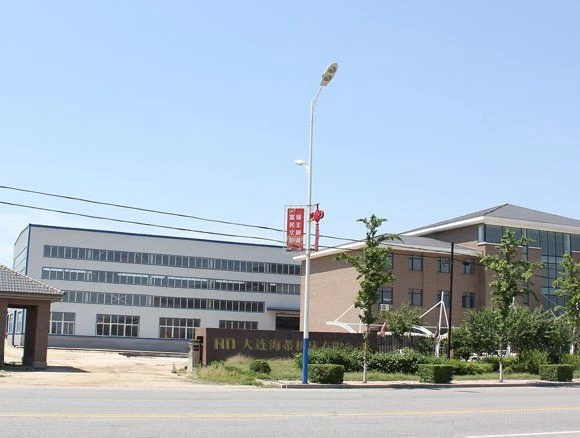
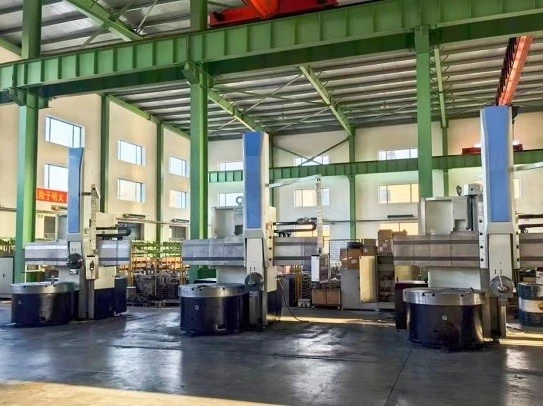
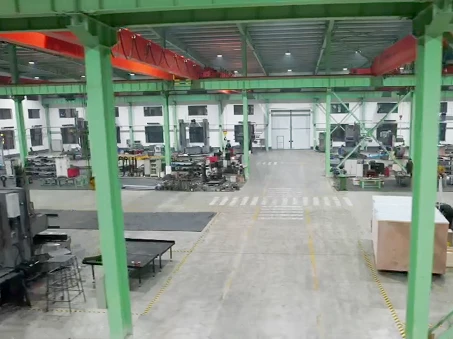
Dalian Haidi Machinery Co.,Ltd is a professional manufacturer that specializes in the development, research and production of single-column vertical lathe, double-column vertical lathe, horizontal lathe, boring-milling machine, machining center, gear hobbing machine. The researched products by our company have such advantages as a great variety, complete specification, advanced technology and outstanding quality. Haidi Machinery covers building area of 30,000 square meters. Now we have more than 200 staff members, including 11 senior engineers, 8 senior managerial staff, over 160 technical workers. Our factory has strong strength and excellent processing equipment. The machine tools produced by our factory are sold all over the country and the world. The advanced design, reliable trustworthy, simple operation, flexible use, high precision, high cost performance and perfect after-sales service have won the unanimous praise of users. Our company is the largest enterprise that specializes in the casting of machine tool in southern Liaoning.In the meantime, it has offered great support to speed up our company's product research and production and made great contribution to providing products to customers in the shortest duration.


What Is CNC Machining Center
CNC machining center can be said to be the integration of machine functions. A CNC machining center covers a variety of machining capabilities. One-stop manufacturing reduces machine replacement time and improves production efficiency. The CNC machine center is an advanced manufacturing machine tool. Machinery can perform various machining operations. The CNC machine tool center (machine centre) is an advanced manufacturing machine tool that can perform a variety of machining operations with high precision, high quality, and high surface finish. A CNC machine tool center can perform drilling, milling, and lathe operations.
Advantages of CNC Machining Center
Safety
The operator of a CNC machine is safely separated from all sharp parts by a special protective structure. He can still see what is happening on the machine through the glass, but he does not have to walk anywhere near the mill or spindle.
Save labor cost
CNC machining centers are made to cut the parts themselves. There is no need to touch anything. The tool moves automatically and the operator only has to check for errors in the program or setup.
Minimum setup error
CNC machining center don't rely on operator proficiency with measuring tools, and good workers can ensure that parts are assembled with high accuracy.
Excellent machine condition monitoring
Modern CNC machining centers are crowded with different sensors. You can monitor torque, temperature, tool life and other factors as you machine the workpiece.
Why Choose Us
Experienced team
Our staff comprises seasoned professionals with extensive experience in technology development, offering deep expertise in a wide array of tech domains.
Quality assurance
We adhere to stringent quality control processes to deliver reliable and high-performance products that exceed industry standards.
Customization
Our team of experts provides tailored services to address specific challenges, ensuring each solution is unique and perfectly suited to the client's requirements.
After-sales service
Dedicated to strict quality control and thoughtful customer service, our experienced staff members are always available to discuss your requirements and ensure full customer satisfaction.
Leading factory
20+years' production experience as the leading manufacturer for vertical lathe,horizontal lathe, machining center,boring machine,milling Machine, drilling machine, slotting machine, gear hobbing machine, etc.
Exportation to 60+ countries
Our products have exported to Australia, Chile, Peru, Turkey, Russia, Indonesia, Saudi Arabia,USA, Belarus, Argentina Singapore and others, around 60 countries.
Mechanism Type Of CNC Machining Center
The main purpose of the CNC machine center is to reduce production time and advanced mechanisms in the CNC machine center. The machining center has a horizontal spindle and the tool is mounted on the spindle of the machine, usually a single spindle machine with an automatic tool changer. The consists of a replaceable magazine that can store multiple tools and hold approximately 16 to 100 tool capacities.
To reduce loading and unloading time, an automatic pallet changer can be installed. The consists of six, eight or more pallets, the workpiece can be set in the pallet, and the machine can be programmed to complete the previous pallet. After working, change another new tray. Different programs may be required for different workpieces. Due to the high material removal rate in the process, the cutting tool volume is usually large, so the tool magazine requires a large position on each tool, and the relative weight is getting heavier. Some machine tools also have additional functions for rotating the entire spindle so that the horizontal axis of the spindle becomes vertical, allowing for different operating techniques. In this type of machine, multiple jobs can be done in a single setup. Most vertical machining centers have three axes, and some have the function of a spindle head that can be rotated on one or two axes.
To process the engraving surface, the vertical machining center is most suitable for the mold and mold processing industry. The main types of vertical machining centers are as follows: walking columns, gantry structures, and multi-spindles. The machine center is similar to a horizontal machining center, but the spindle shaft can be continuously tilted from a horizontal position to a vertical position under computer control. The universal machine center consists of five or more axes that allow the top surface of the workpiece to be mounted on a horizontal machining center so that different sides of the workpiece can be machined in one unit.
Everything You Need To Know Before Buying CNC Machining Center
While a machine can use one tool for machining comfortably, businesses can consider using several smaller tools to improve efficiency. Large tools need hoists to move them, while small tools do not. Attaching three tools instead of one could mean more time saved in machining. At the same time, some machines have a tool capacity of between 20-60 tools. This can easily be expanded to 100-200 tools depending on the complexity of the part. Tool materials can determine the tool’ s life because a tool can be made from different materials, which equate to different performances.
A tipped tool is 25% faster than a solid carbide tool. Its tool life is four times that of solid carbide and can be retooled many times. Businesses that can use steel tools will drop the cost of operation by 75%. Other tools to be considered are speed steel or carbide tipped, much cheaper tools. Having a tool with multiple features can save time and money. Instead of changing a tool five times and making five passes, one tool that can machine five different ways will reduce operating costs. The volume being processed will determine the type of tool used. High-end tools come in handy when the volume is increased. They can produce good quality machining for a long time. Low-end tools can be used if the volume of the work is low. The workpiece material will determine the type of CNC machine to be used.
For example, the machine is excellent for grey iron, ductile iron, and aluminum. Therefore, a business should consider the type of material they will be processing before making a purchase. It is the part that helps in machining. The spindle is essential because of the speed it can achieve. Some spindles can spin at 24,000 rpm, increasing the accuracy of a workpiece, a factor that businesses should determine before choosing a machining center. Depending on the requirement of the work, some machining centers are more precise than others. The machine accuracy for milling is 6.3-1.6 μm. The milling accuracy is the rotation of a multi-cutting blade on a workpiece. Planing is a cutting method that horizontally reciprocates the workpiece.
Major Differences in Different CNC Machining Center
CNC machining has gained a lot of popularity since the technological boom in the manufacturing industry. In the modern era, a significant majority of the manufacturing industries use CNC machining centers for their operations. Automation and optimization are the keys to effective development in the production and manufacturing industry, and these machines epitomize these qualities.
These are machines that use numerically controlled motors to operate and perform different machining operations. Owing to the precision-based control system handling each machine axis, a variety of operations can be achieved with remarkable accuracy. A few examples of these machining operations include drilling, turning, milling, and other operations, which are commonly used in large-scale production. Since their arrival, they have significantly increased the productivity of major industries and mass production has sky-rocketed. All CNC machines follow a similar approach that is based on numerical codes to operate but they usually differ in their operations. Some machines are based on the basic principles of a lathe machine in which parts with circular cross-sections are dealt with.
The workpiece and tool are both in relative motion as well in lathe machine setups. While in the case of milling centers, there is more freedom regarding workpiece shape, it can be anything from a block to a crude shape. Usually, the working job is fixed and only the tool is moving. However, a CNC milling center with a higher number of axes also allows for relative movement between both. Another major point where these machines differ in their size and structure. Small machining centers are usually no bigger than a small car. They are easily managed by a single foreman and are used for machining smaller parts, with high precision and accuracy. These machines are, due to their smaller inertia, capable of quicker movements. On the opposite end of the size spectrum are usually industrial-grade gantry-style CNC machines.
They have a gantry structure to support the tool spindle, with the workpiece mounted on a separate bed below. Since gantry machines are generally bigger in size, they are used in heavy industries and are managed by a team of people. Speeds are slower owing to their sheer size and cutting forces. However, their mechanical integrity is much higher because of the more stable mechanical structure.
Parameters of CNC Machining Center
CNC machining centers make use of multiple parameters, understandably because of the level of complexity they are capable of achieving. One can easily find these parameters in the machine’s operation manual. These usually refer to the initial input you would provide the machine before the operation starts. It consists of the unit system, the plane selection, and the feed rate. These parameters set your machining time.
The higher the value of these canned cycles, the more time it will take to machine the part. This is usually done to maintain the least count of the machine and make sure any zero error is avoided. This parameter is related to the process by which the file for the part to be manufactured is input into the system. These consist of G and M-codes that are used to provide input for the moving tool and carry out the machining operation. They use numerical controls for their operations, hence, are much more precise.More complex shapes can be easily machined due to multi-axis machining capacities. Machining is much quicker as compared to older times. Multiple tools can be used during a single machining operation without much hassle. High-capacity turrets and tool magazines are common in CNC machinery.
Coolants are now being numerically controlled as well generally referred to as Minimal Quantity Lubrication (MQL), making the process more automated and cheaper. Specialized cutting tools have in-built coolant delivery channels for lesser friction and heat dissipation. Machining of micron level features using very small tools is a growing field that is only possible because of CNC technology. These are just a few of the main features of CNC machining centers. If you go through the recent advancements then based on the type of machine, you would find innumerable machine-specific features as well.
Scope Of Application Of CNC Machining Center
Box type parts with more than one hole system and more internal cavity parts called box type parts, such parts in the machine tool, automobile, aircraft and other industries more applications, such as automobile engine block, gearbox box, machine tool spindle box, diesel engine block, gear pump housing. When machining on the machining center, a clamping can complete 60% to 95% of the process content of the ordinary machine tool.
In addition, with the machining center's own accuracy and high processing efficiency, good rigidity and automatic tool change characteristics, as long as the development of a good process flow, the use of reasonable special fixtures and tools, you can solve the box type parts of higher precision requirements, more complex processes and improve production efficiency and other problems. In aviation, aerospace and transportation industries, parts with complex surfaces are widely used, such as cams, integral impeller of aircraft engines, propellers, mold cavities, etc. This kind of parts with complex curves and curved profiles, or box or shell parts with no open inner cavity, it is difficult to achieve the predetermined processing accuracy by ordinary machine tools or precision casting. The use of multi-axis linkage machining center, with automatic programming technology and special tools, can greatly improve its production efficiency and ensure the shape accuracy of the surface, so that the automatic processing of complex parts becomes very easy. Shaped parts are irregular shape parts, most need point, line, surface multi-station mixed processing (such as bracket, base, mold, etc.) processing of shaped parts, the more complex the shape, the higher the precision requirements, the more the use of machining center can show its advantages. This type of workpiece includes disk sleeve or shaft workpiece with keyway and radial hole, end face distribution with hole system, curved surface, such as shaft sleeve with flange, etc., and plate parts with more openings, such as various motor covers.
Among them, disk parts with distributed holes and curved surfaces on the end face often use vertical machining centers, and horizontal machining centers with radial openings can be used. The machining center has a wide range of adaptability and high flexibility, and when replacing the processing object, it is necessary to prepare and input a new program to realize the processing. Sometimes processing can be achieved by modifying part of the program segment or by using some special instructions. Such as the use of scaling function instructions can process the same shape but different sizes of parts, which provides great convenience for single piece, small batch, multi-variety production, product modification and new product trial production, greatly shortening the production preparation and trial production cycle.
How Does CNC Machining Center Work
The CNC machining center connects to a computer with the appropriate software. The machine will operate a computer and its programming language which allows the machine to interpret commands from CAD/CAM software. The CNC machining center is then set up with the appropriate tooling and materials. This may include drills, taps, and end mills to name a few. Also, any special fixtures and coolant may be included in the setup. With the correct software, a trained operator can program the CNC machining center to produce efficient and accurate results. This programming tells the machine where to move, what tools to use, and how much material should be removed.
The program then uploads to the CNC machine and it begins to run. It will automatically move the tools and cut away excess material as per the program’ s instructions. The CNC machining center will continue to execute the program until it finishes and then shut itself off. Lastly, the operator can inspect the results of the machining process to ensure accuracy and quality.
Certificate


FAQ
As one of the leading CNC machining center manufacturers and suppliers in China, we warmly welcome you to buy cheap CNC machining center made in China here from our factory. All our products are with high quality and low price.
standard vertical lathe, woodworking vertical lathe, alloy vertical lathe